Resurrection?
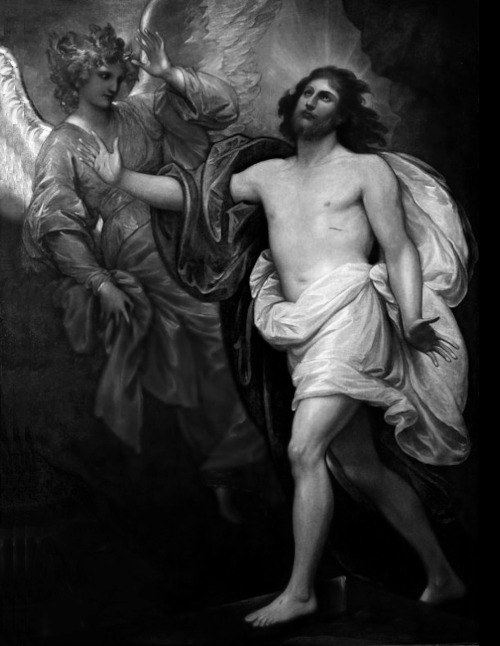
The moment of reanimation of Jesus' corpse is referred to as the “Resurrection”. Most Christians agree that the Resurrection is the central tenet of their belief system. If Jesus was not resurrected, then everything claimed in the New Testament is quite pointless.
Even so, if I am told that in c. 33 C.E., after being violently beaten and scourged, crucified, and pierced through the chest cavity by a pilum, a dead human male, aged about 33 years, was fully re-animated some 39 hours after his death, I have the right to remain highly sceptical.
If the only evidence for this delusional claim is based on something that a hypothetical author called “Matthew” wrote in c. 70–100 C.E., I will still not consider that to be sufficient proof.
Even if billions of people (consensus) believe that this event occurred and also claim that the gospel of Matthew is as good as the word of “God” himself, I will still remain unrepentant and wholly unconvinced.
However, I might be prepared to accept the possibility that a corpse can be reanimated if the following was provided to me:
A paper, published by an accredited scientific medical journal which recorded a controlled experiment in which a human corpse—one that had been certified dead for more than 39 hours and (whilst still alive) similarly mutilated to the one described by “Matthew”—without assistance, suddenly got up, walked through walls, spoke coherently and consumed food.
This experiment would also have had to be conducted under guaranteed clinical conditions, observed by leading authorities in such fields as cell biology, cognitive biology, histology, forensic pathology, and neuroscience etc.
I cannot be fairer than that.