Gods?
Scientific inquiry acquires knowledge by objectively testing the validity or refutability of an hypothesis by means of a repeatable experiment and/or evidence that stands up to repeated verification.
At its most basic level, science requires that any claim be substantiated with hard evidence. Contrary to popular misinformation, science does not claim that it always has the answers. Science, in the right hands, is an extremely humble and cautious endeavour.
The rules are very simple: if anyone makes a particular claim, then the onus is on that person to provide irrefutable evidence to hold up that claim under repeatable test conditions. It is not acceptable for someone to make a ridiculous claim and then simply expect everyone else to either accept it or disprove it. Another way of looking at this is to say that incredible claims require incredible proof.
If one imagines that some Canaanite god, created the Universe then it simultaneously raises the question of who or what created that imagined entity. Here, the fictional concept of an invisible and eternal “God” ends up having to employ quite unnatural means to bring about its own existence.
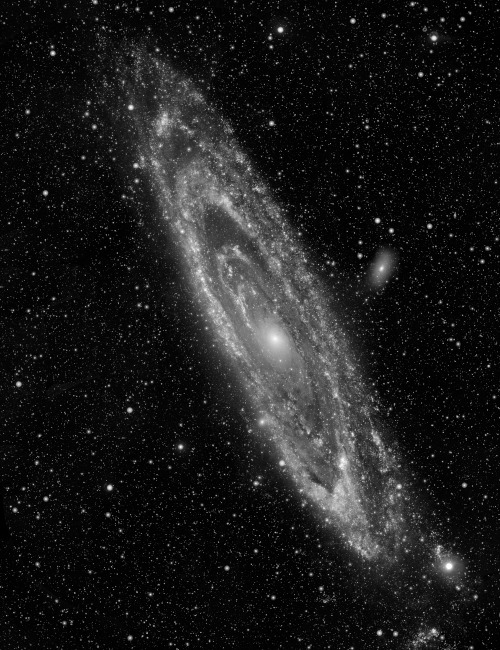
Yet our observable Universe, estimated to be slightly less than some 13.77 billion years old, without the assistance or planning of anything unnatural or supranatural, has been quite capable of producing literally everything we currently see and know, viz.: some two trillion galaxies, at least several hundred billion trillion stars, countless quadrillions of planets, satellites, and asteroids, an estimated hundred billion black holes and at least 750,000 quasars.
However, from a limited, fundamentalist Christian perspective, this gargantuan and highly complex Universe is merely some minor backdrop to an all-important Earth. A single world, created magically in just six days for the sole benefit of indispensable human beings.
Honestly, religious dogma makes their deity’s “creation” look like some small-time Vaudeville act compared to the unfathomable grandeur we witness as scientists.
Instead of naively believing in an extinct, Bronze-Age, imaginary, and invisible super being—one that has to employ quite unnatural means to bring about its own fictional existence—why not simply defer to the latest scientific findings?